Serverfarm’s modern, award-winning global portfolio of data centers provides enterprises with critical IT infrastructure and capacity. Our facilities were designed to meet our customers’ rapidly evolving requirements and are highly secure, reliable environments.
InCommand enables enterprise executives and data center teams to manage assets, capacities, and alerts virtually anywhere in the world.
The longest Neal Bryant ever went without touching dry land was 76 days.
When a ship finally came in after a stretch like that, the sailor’s checklist was beautifully simple. Look for family on the pier. Try to start the Camaro that had been sitting for two months (it usually wouldn’t). Find a payphone. Check into a Best Western, because a hotel shower was a reward after taking 3 minute sea showers for weeks. Exceeding the 3 minute time in a shower his ship would earn you a write-up if you broke it. Then after showers, go to a restaurant and eat a real meal.
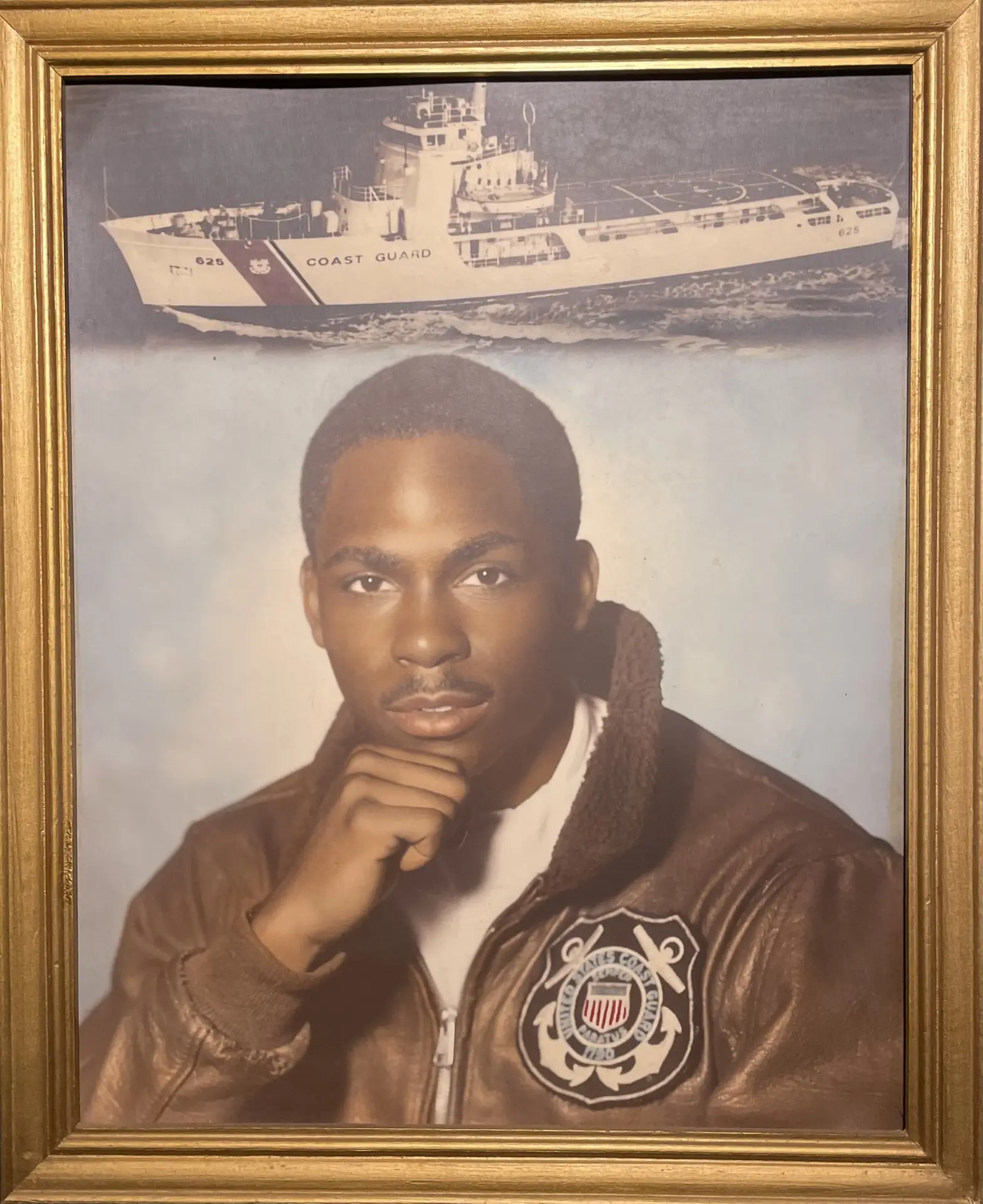
Neal was 17 when he started that life. Today he is Serverfarm’s Senior Field Engineer, responsible for quality assurance across the mechanical, electrical, power, fire and plumbing systems of data centers throughout North America. The uniform changed. The mission didn’t.
Neal served in the U.S. Coast Guard from 1986 to 1996 as a main propulsion electrician, which means he lived, in his words, “pretty much in the engine room.” He spent years at sea on back-to-back sea duty, and the stories he tells are the kind you don’t forget.
In 1989, at just 19, he helped clean up the Exxon Valdez oil spill. He has been through the Strait of Juan de Fuca roughly ten times. He has run a P-250 fire pump off the coast of Catalina on the night a family’s sailboat was taking on water, getting them onto life rings and off the vessel before it went down.
He remembers a night when the call was real, not a drill: fire in the engine room, hundreds of miles from anyone who could help. “The Coast Guard has to save themselves,” he says. It was the first time he put on a breathing apparatus and charged a foam fire station. His crew put the fire out.
And he remembers the 3 a.m. drug interdiction runs, dropped over the side in a small boat into dark, heaving water, losing sight of the ship, then catching it again in the sweep of a searchlight. Scary doesn’t quite cover it. But the lesson he carried out of those nights is the one that shapes everything he does now: nobody gets through alone.
When he left the Coast Guard, the service gave him one week of transition training, including resume writing and how to present himself. After that, he says, “you’re on your own.” Anyone who has left the military knows the culture shock: one day everything is arranged for you, and the next you’re figuring out your own taxes and your own dinner.
Neal figured it out. He went to construction law and trade school, earned his California high-voltage contractor’s license, and started his own electrical company just as the cellular industry was taking off. From there came 13 years as a stationary engineer in San Francisco high-rises, then 14 years in data centers: chief engineer at SAP Labs in Palo Alto, regional facility manager for DataBank across the West Coast, a hand in launching Georgia Tech’s first Beehive rear-door cooling system and the first microgrid in downtown Atlanta, and a role at Microsoft helping stand up an AI data center from bare ground.
In June 2025 he joined Serverfarm. “At Serverfarm, I have lots of windows,” he laughs, “and lots of places to exercise my legs.” He travels constantly: Los Angeles, Chicago, Virginia. He leads site audits across North America, bridges construction and operations teams, and closes gaps in procedures. His first move at every site is the same, and it is pure Coast Guard: “Make friends with them.”
Ask Neal why military people thrive in this industry and he is careful, a little funny, and very clear. Everyone wants to do a good job, he says. But service members carry something extra: a mission-critical drive, a commitment to deliver on time, comfort with process and procedure, and no ego about asking for help. “We believe in camaraderie.” He adds that the military also teaches when to make the call and when to bring others into the huddle before a decision with a huge blast radius. In a data center, where one mistake can ripple across a nationwide portfolio, that judgment matters.
The numbers back up his instinct, and they point to a real opportunity.
The skills line up. Military experience in power generation, electrical and mechanical systems, HVAC, communications, IT, safety compliance and preventive maintenance can transfer almost directly into critical environments work.
But the connection isn’t automatic. Syracuse University’s Institute for Veterans and Military Families, analyzing BLS data, put the veteran unemployment rate at 3.5% in September 2026, with post-9/11 veterans at 4.1%. In June, an estimated 335,000 veterans were unemployed. Younger veterans swing the most: those aged 18–24 reached 17.4% unemployment that month, before dropping to 8.2% in July. Data center leaders admit that many veterans leave service without knowing where their skills are most valued, and end up in jobs that underuse them.
The talent is there. The industry needs a front door, and it needs people who will hold it open.
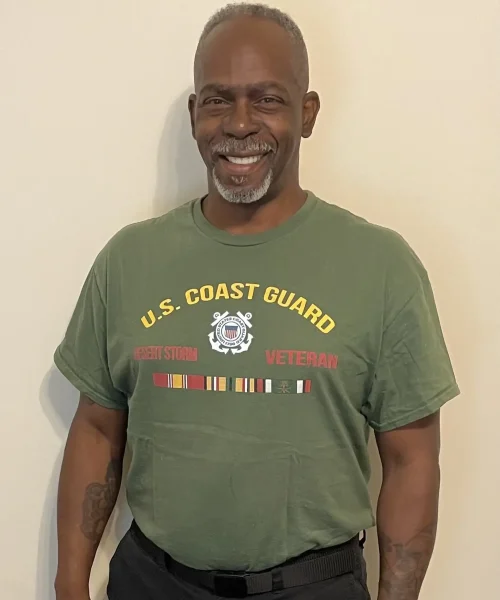
Neal holds that door open.
This is the second military employee resource group he has started in his career. At Serverfarm, it began with a conversation with Billy, a senior director of construction and a Marine. Why don’t we do a military group? They took the idea to HR, and the veterans group became Serverfarm’s first-ever employee resource group.
Today it has about 40 members. Neal leads the U.S. base, and he never runs a meeting without his international counterparts on the call, which keeps the group global. A recent meeting snapshot shows what the group looks like: a Virginia site manager, Marines, Army, Navy, and Neal, the only Coast Guard member in the company.
The group is a collaboration space and a place to talk about benefits veterans have, benefits they’d love to see, and challenges in any part of life. It is also, simply, a room full of people who get it.
This year the group made its first official challenge coins, and Neal is excited to finally have them in hand.
What does leading this community give back to him? Neal doesn’t hesitate.
“We’re getting comfort,” he says. “Similar people, similarities in our lifestyles, common challenges.” For an experienced engineer who has spent four decades mentoring crews and fixing gaps in processes, the group is a place where he is also supported, among people who share the same mission-first instinct and the same sense of humor about 3-minute showers and sea rations.
And he loves being the one who helps others. He vets every idea through a small committee, then opens it to the whole group. When he shared that this interview was happening, the likes and hearts poured in. Those who come into the industry nearly straight from the military, he says, share a few things: they are brave, they don’t fear a challenge, and they are driven by the mission.
“Some riches are not money,” Neal says.
He still makes his bed with tight hospital corners, so the sheets don’t kick out and become a trip hazard. He still prefers talking face to face over texting, because in the service you “stand and deliver.” And he still believes what every crew on every ship believes: the ship doesn’t sail unless all of us push.

To Neal, to the 40 members of Serverfarm’s veterans community, and to every veteran who keeps the digital world running: thank you for your service, and thank you for continuing to serve in this work.
If you’re a veteran thinking about a career in data centers, know this: your training, your discipline and your instinct to take care of the team are exactly what this industry needs. And if you’re an employer, take a page from Neal’s book. Make friends first. Then build a place where veterans know they belong.
Sources: Syracuse University IVMF analysis of BLS data (June–September 2026); Uptime Institute, via Bisnow; Schneider Electric hiring initiative, via WorkLife/Digiday; Salute Mission Critical and UHP partnership, via ChannelLife. Please verify statistics before publishing.
| Cookie | Duration | Description |
|---|---|---|
| cookielawinfo-checkbox-advertisement | 1 year | Set by the GDPR Cookie Consent plugin, this cookie is used to record the user consent for the cookies in the "Advertisement" category . |
| cookielawinfo-checkbox-analytics | 11 months | This cookie is set by GDPR Cookie Consent plugin. The cookie is used to store the user consent for the cookies in the category "Analytics". |
| cookielawinfo-checkbox-functional | 11 months | The cookie is set by GDPR cookie consent to record the user consent for the cookies in the category "Functional". |
| cookielawinfo-checkbox-necessary | 11 months | This cookie is set by GDPR Cookie Consent plugin. The cookies is used to store the user consent for the cookies in the category "Necessary". |
| cookielawinfo-checkbox-others | 11 months | This cookie is set by GDPR Cookie Consent plugin. The cookie is used to store the user consent for the cookies in the category "Other. |
| cookielawinfo-checkbox-performance | 11 months | This cookie is set by GDPR Cookie Consent plugin. The cookie is used to store the user consent for the cookies in the category "Performance". |
| elementor | never | This cookie is used by the website's WordPress theme. It allows the website owner to implement or change the website's content in real-time. |
| viewed_cookie_policy | 11 months | The cookie is set by the GDPR Cookie Consent plugin and is used to store whether or not user has consented to the use of cookies. It does not store any personal data. |
| Cookie | Duration | Description |
|---|---|---|
| _ga | 2 years | The _ga cookie, installed by Google Analytics, calculates visitor, session and campaign data and also keeps track of site usage for the site's analytics report. The cookie stores information anonymously and assigns a randomly generated number to recognize unique visitors. |
| _ga_devsite | 2 years | This cookie is installed by Google Analytics. |
| _gat_gtag_UA_71524600_1 | 1 minute | Set by Google to distinguish users. |
| _gid | 1 day | Installed by Google Analytics, _gid cookie stores information on how visitors use a website, while also creating an analytics report of the website's performance. Some of the data that are collected include the number of visitors, their source, and the pages they visit anonymously. |
| CONSENT | 2 years | YouTube sets this cookie via embedded youtube-videos and registers anonymous statistical data. |
| Cookie | Duration | Description |
|---|---|---|
| VISITOR_INFO1_LIVE | 5 months 27 days | A cookie set by YouTube to measure bandwidth that determines whether the user gets the new or old player interface. |
| YSC | session | YSC cookie is set by Youtube and is used to track the views of embedded videos on Youtube pages. |
| yt-remote-connected-devices | never | YouTube sets this cookie to store the video preferences of the user using embedded YouTube video. |
| yt-remote-device-id | never | YouTube sets this cookie to store the video preferences of the user using embedded YouTube video. |